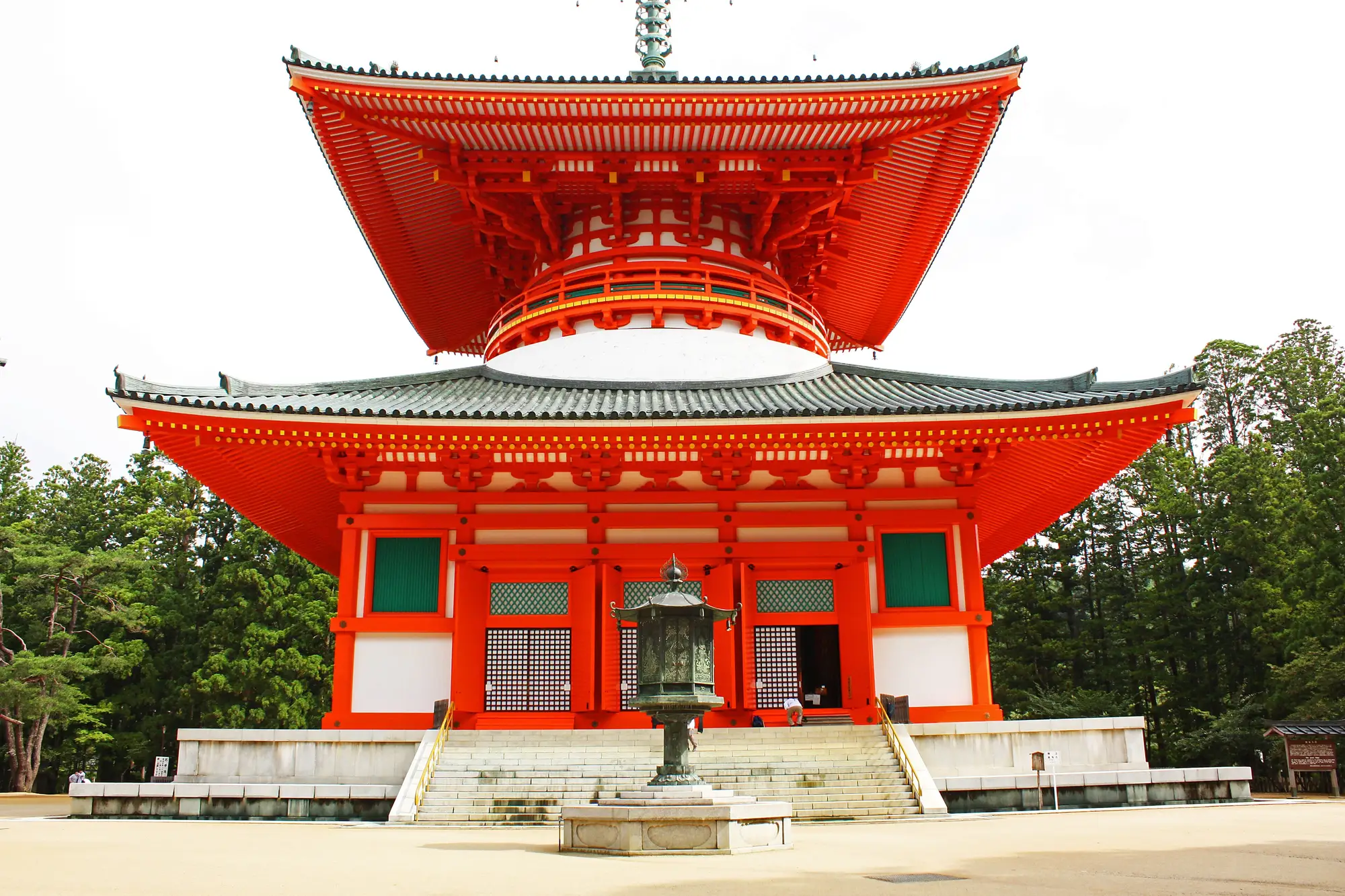
Wakayama · Japan
Aoba Matsuri
Every June, well over a thousand monks, children, dancers and townspeople follow a flower-decked float down Koyasan's main street, marking the birthday of the monk who founded this mountain twelve centuries ago.
A living founder's birthday, not a historical reenactment
Unlike a festival for a harvest or a myth, Aoba Matsuri marks the birthday of a specific historical figure whose presence still shapes daily life on the mountain. Shingon tradition holds that Kobo Daishi did not die in 835 but remains in eternal meditation in his mausoleum at Okunoin, and monks still carry meals to him twice a day. The festival is, in effect, a birthday party for someone the mountain considers still present.
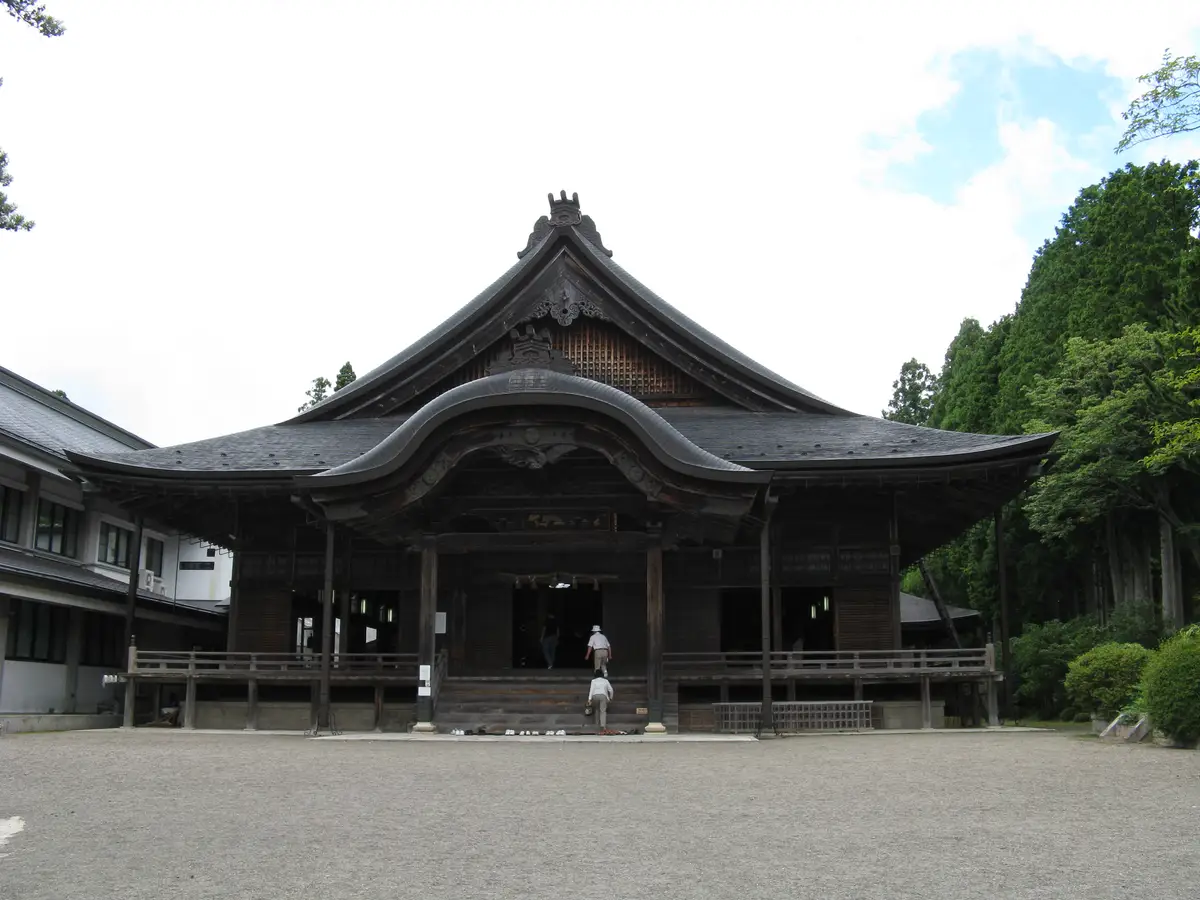
The religious core is old. The birthday rite first appears in Kongobu-ji's record of annual ceremonies written in 1778, when it was held in the Kondo hall of the Danjo Garan; it moved to the Daishi Kyokai when that hall was completed in 1915. The street procession is much newer. According to the Koyasan Hosankai, the association that runs it, the modern form began on the night of June 14, 1952, when a neighbourhood association danced the Daishi-ondo along the main street from Ichi-no-hashi to the Daimon gate. It later moved to daytime, fife-and-drum bands and goeika hymn singers joined in 1986, and illuminated nebuta lantern floats made by the town's young businesspeople joined in 1987.
The procession itself is a local, community event rather than a staged show. The Chigo Daishi rides on the Hanamido float, while four young women chosen as "Aoba-musume" scatter paper talisman cards (sange) to the crowd from its corners. Behind them come Daishi-ondo dancers, school groups, bands and hymn groups, and in 2025 the programme also included a mochi-throwing. Rurubu puts the crowd at around 10,000 spectators.
The date needs checking each year. The birthday service is always on June 15, but in 2019 the Hosankai moved the procession to the second Sunday of June to keep it on a weekend, and in 2024 it was held on Sunday, June 9. In 2025 (a Sunday) and 2026 (a Monday) the procession was held on June 15 itself. Confirm the current year's schedule with Kongobu-ji or the Koya Town Tourism Association before booking.
The festival schedule
The pattern of recent years. Times are the published ones for 2025 and 2026; confirm the current year before you go.
| When | What | Where |
|---|---|---|
| Evening before the procession | Eve festival (zenyasai) | Around the plaza in front of Kongobu-ji. The Koya Nebuta lantern-float parade, held since 1987, ended after 2026. |
| June 15, 9:00 | Birthday service (Shuso Gotan-e) | Daishi Kyokai hall, next to Kongobu-ji |
| Procession day, 12:00 | Hanamido procession | From Ichi-no-hashi west along the main street to the Kongobu-ji / Daishi Kyokai area, about 1–1.5km |
| Procession day | Mochi-throwing | Part of the 2025 programme |
Before you go
For the start of the procession, be at Ichi-no-hashi a little before noon. For a less crowded view, stand further west along the main street toward Senjuinbashi and Kongobu-ji and let the procession come to you. The street stays open to pedestrians, but traffic is restricted.
A good festival-day plan: walk Okunoin early in the morning, before the crowds and while the 6:00 meal offering to Kobo Daishi takes place, then come back to Ichi-no-hashi for the noon start.
June in Kansai is the rainy season (tsuyu). Pack rain gear even if the forecast looks clear, since Koyasan's altitude makes the weather more changeable than in Osaka or Wakayama City, and it is noticeably cooler.
Temple halls keep normal hours on festival day: Kongobu-ji, the Kondo and the Konpon Daito are open 8:30–17:00 (last entry 16:30). See the Koyasan temple lodging guide for fees, the combined ticket and where to stay.
The Daishi Kyokai, where the birthday service is held, is open to visitors on ordinary days too: you can copy a sutra there (¥1,500) or take part in a short jukai precepts ceremony (¥1,000, held hourly from 9:00 to 16:00 except at noon).
If June does not work, Koyasan's other big night is August 13, when about 100,000 candles line the Okunoin path for the Rosoku Matsuri (Mando Kuyo-e), from about 19:00.
Getting to Aoba Matsuri
Take the Nankai Koya Line from Namba to Gokurakubashi (about 80 minutes on the Limited Express Koya, about 100 minutes on express trains, usually changing at Hashimoto), then the cable car to Koyasan Station (5 minutes) and a Nankai Rinkan bus into town. Allow 1.5 to 2 hours in total. The main Koyasan guide has fares and ticket options.
For the procession start, get off the bus at Okunoin-guchi or Ichinohashi-guchi; for the finish, get off at Senjuinbashi or Kongobuji-mae. Buses may be diverted while the main street is closed, so allow extra time.
Once you are on the mountain, the procession route is walkable from anywhere in town.
Primary sources
- Kongobu-ji — The Birth and History of Kobo Daishi
- Kongobu-ji — Annual events
- Koyasan Hosankai — change of Aoba Matsuri procession date (Japanese, PDF)
- Koya Town Tourism Association — events (Japanese)
- Koyasan Shukubo Association — event calendar
- Kyodo News via Yahoo! News — 2026 Aoba Matsuri report (Japanese)
- Visitor report on the last Koya Nebuta, 2026 (Japanese blog; the ending was also reported by the Yomiuri Shimbun)
- Rurubu — Aoba Matsuri (Japanese)
Last updated: