Wakayama · Japan
Koyasan Autumn Leaves
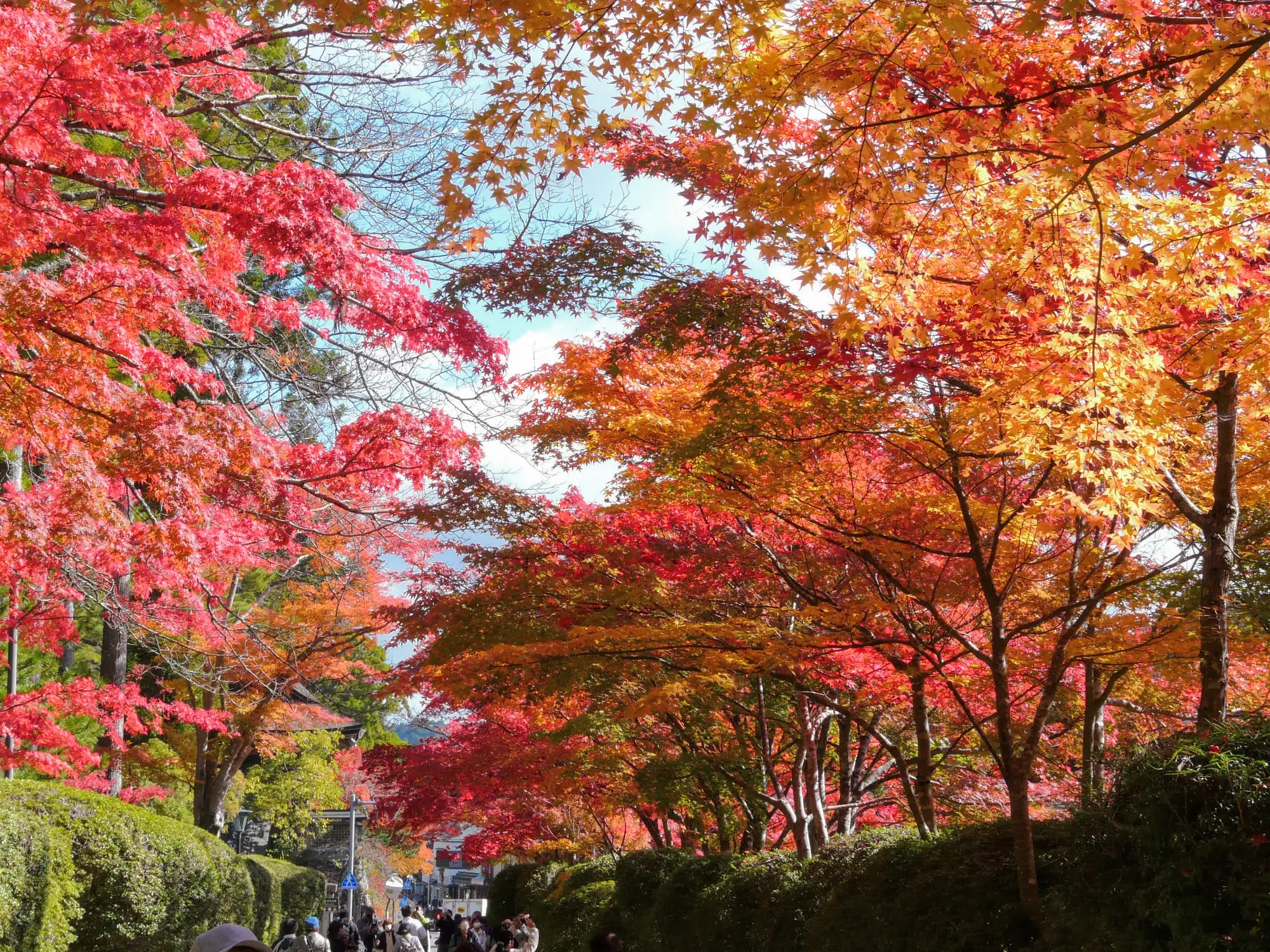
At 800–900 metres, Koyasan turns red and gold weeks before Osaka and Kyoto do, and the short walk between its two central temple complexes becomes a tunnel of maple colour, lit after dark.
The same walk you'd take anyway, at its best moment
Jabaramichi (蛇腹路, "dragon's-belly path") is not a detour. It is the direct walking route between Koyasan's two central temple complexes, Kongobu-ji and the Danjo Garan, which most visitors cover on any ordinary day. The name comes from an old reading of the mountain's layout: the temple buildings are said to lie like a sleeping dragon, with the Garan as its head, and this path runs along its belly. For roughly two weeks in autumn, the same walk runs under a canopy of maples at peak colour. The path is short, around 500 metres from the front of Kongobu-ji to the Garan, so you can walk it at dusk and again by lamplight without much effort.
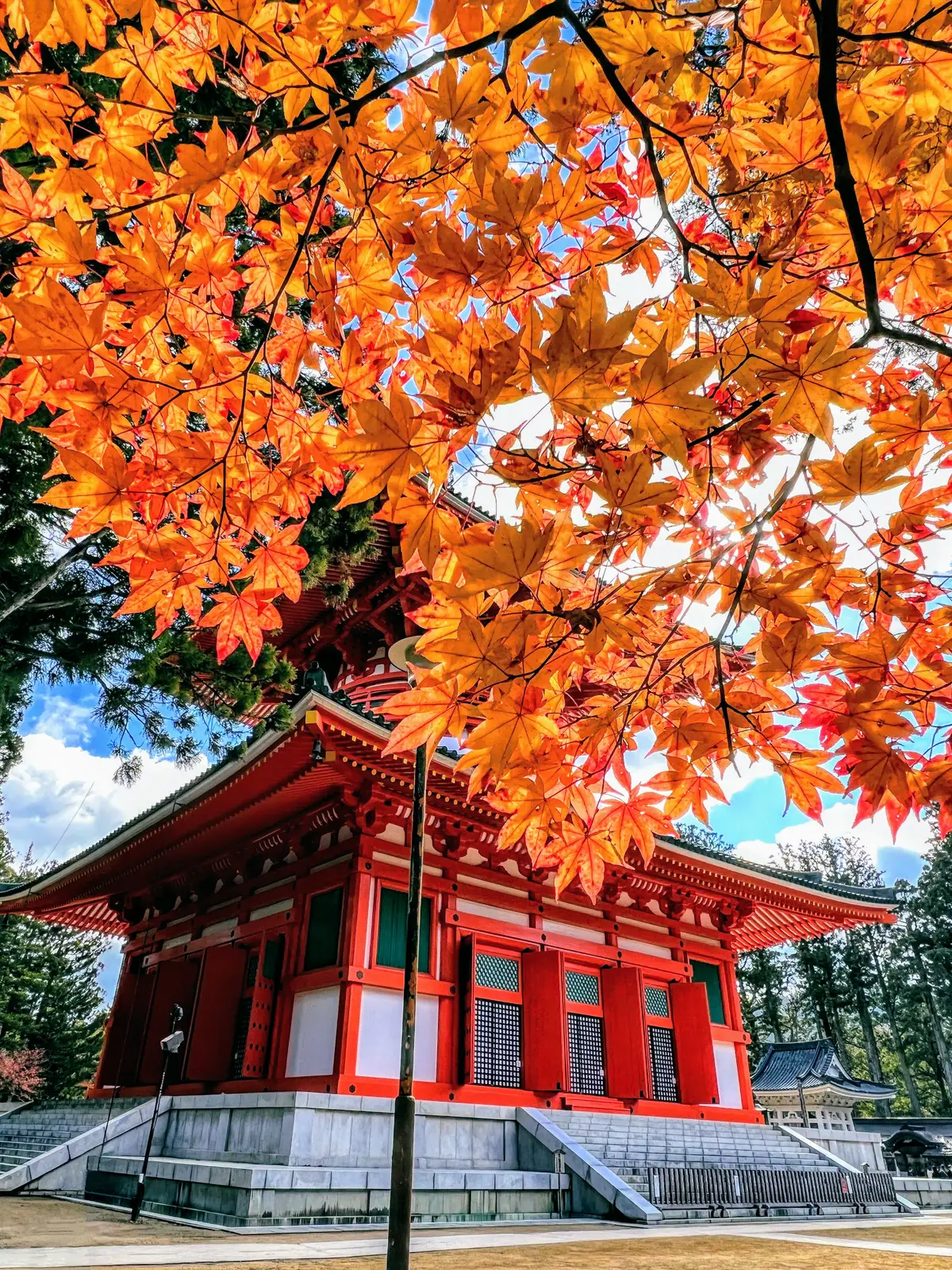
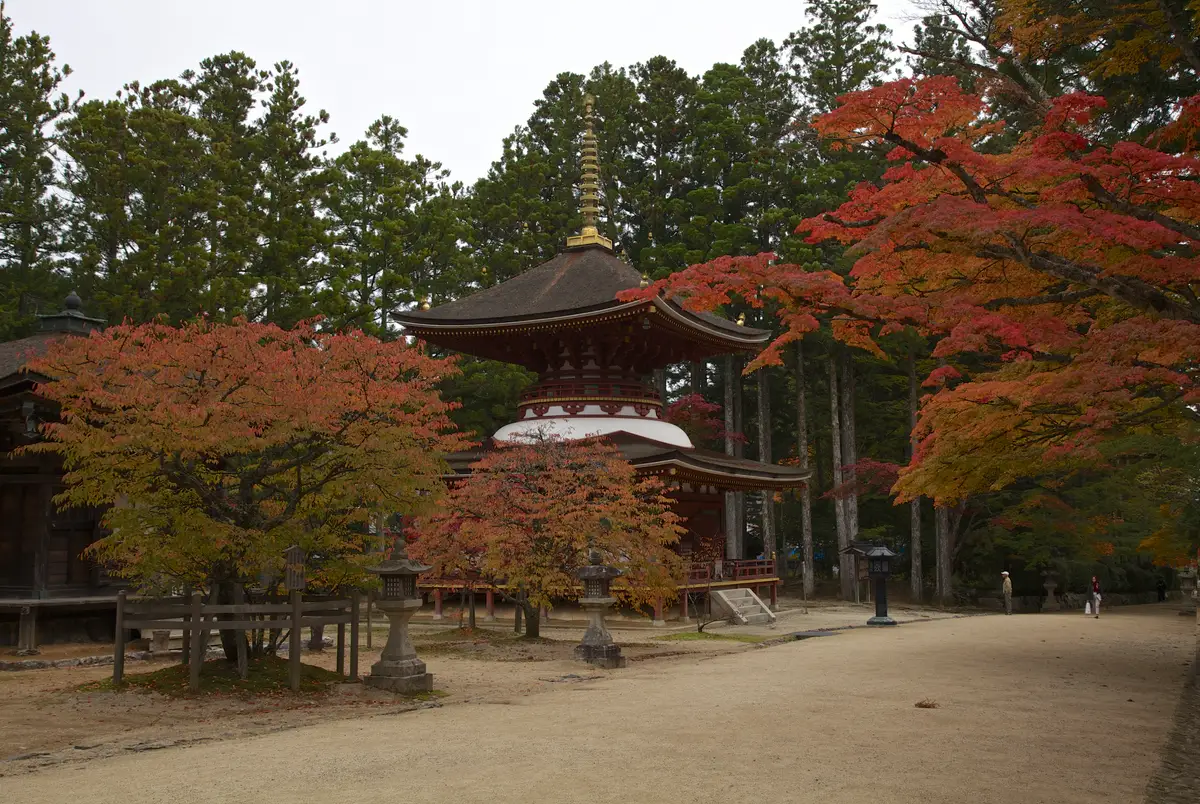
Jabaramichi is only the start. At the Danjo Garan, the vermilion Konpon Daito pagoda framed by red and yellow maples is the classic Koyasan autumn view, and the Garan grounds are free and open at all hours. At Kongobu-ji, maples surround the Banryutei, a rock garden of about 2,340 square metres that is one of the largest in Japan. Along the Okunoin cemetery path, scattered maples turn among the dark cedars, with the area around the Eireiden memorial hall a known spot.
Because Koyasan's altitude brings its peak earlier than most of the Kansai region, it works as a first stop for anyone timing an autumn trip around Kyoto or Nara. You can see Koyasan at its best in the first week of November and still catch Kyoto two or three weeks later.
Maples and ginkgo carry most of the colour in town. On the Koya-Ryujin Skyline, the mountain road running south from Koyasan, beech and oak forests at higher altitude start turning yellow from mid-October, which makes it a good drive if you have a car and arrive before the town's maples peak.
Where to see the leaves
All of these are within walking distance or a short bus ride of the town centre, except the Skyline.
| Spot | What you see | Hours | Cost |
|---|---|---|---|
| Jabaramichi | Maple tunnel over the path between Kongobu-ji and the Garan; lit up after dark in season | Always open; lights from about 17:30 | Free |
| Danjo Garan | Konpon Daito pagoda and Kondo hall framed by maples | Grounds always open; halls 8:30–17:00 | Grounds free; Daito and Kondo ¥500 each |
| Kongobu-ji | Maples around the Banryutei rock garden | 8:30–17:00 (last entry 16:30) | ¥1,000 |
| Okunoin | Maples among the cedars, especially near the Eireiden hall | Paths always open | Free |
| Koya-Ryujin Skyline | Yellow beech and oak at higher altitude, from mid-October | Road; car needed | Free |
Before you go
Peak colour is a moving target. Check a current-year foliage tracker, such as tenki.jp or Weathernews's koyo pages, a week or two before your trip rather than relying on the calendar. Weathernews's forecast issued on September 3, 2026 expected the peak from around November 9, with leaves starting to fall from around November 21.
This is one of the few times of year Koyasan gets genuinely crowded, especially at weekends. If you are staying in a shukubo, walk Jabaramichi early in the morning before the day-trippers arrive, then come back for the illumination after dinner.
Temple halls stop admitting visitors at 16:30. Do Kongobu-ji and the Garan interiors in the afternoon, and save Jabaramichi and the outdoor grounds for dusk, when the lights come on.
Evenings are cold at this altitude by late October. Bring a warm layer for the illumination, and check that your temple lodging has a heater in the room.
Book temple lodging early. November is peak season for Koyasan's shukubo, and the temples that take bookings in English fill first.
Getting to Koyasan for the autumn leaves
Take the Nankai Koya Line from Namba to Gokurakubashi (about 80 minutes on the Limited Express Koya, about 100 minutes on express trains, usually changing at Hashimoto), then the cable car up to Koyasan Station (5 minutes), then a Nankai Rinkan bus into town (about 10 minutes to Senjuinbashi). Allow 1.5 to 2 hours from Namba. The main Koyasan guide has fares and the World Heritage Ticket.
For Jabaramichi, get off at the Kongobuji-mae or Senjuinbashi bus stops; the path starts beside Kongobu-ji and leads west to the Garan.
For a slower ride up, Nankai's GRAN TENKU sightseeing train has run since April 2026: about 90 minutes from Namba to Gokurakubashi, twice a day except Wednesdays and the 2nd and 4th Thursdays, with a seat reservation fee on top of the normal fare.
By car, leave the Keinawa Expressway at Katsuragi-nishi IC and follow Route 480 for about 40 minutes. Koyasan has free car parks, but on peak foliage weekends expect busier roads and fuller car parks, and consider the train instead.
Primary sources
- Koya Town Tourism Association — access (Japanese)
- Kongobu-ji — admission fees and hours (Japanese)
- Japan Tourism Agency multilingual database — Jabaramichi (Japanese, PDF)
- tenki.jp — Koyasan koyo forecast
- Weathernews — Koyasan koyo forecast
- Walkerplus — Koyasan autumn leaves and illumination
Last updated: