Wakayama · Japan
Kumano Hongu Taisha
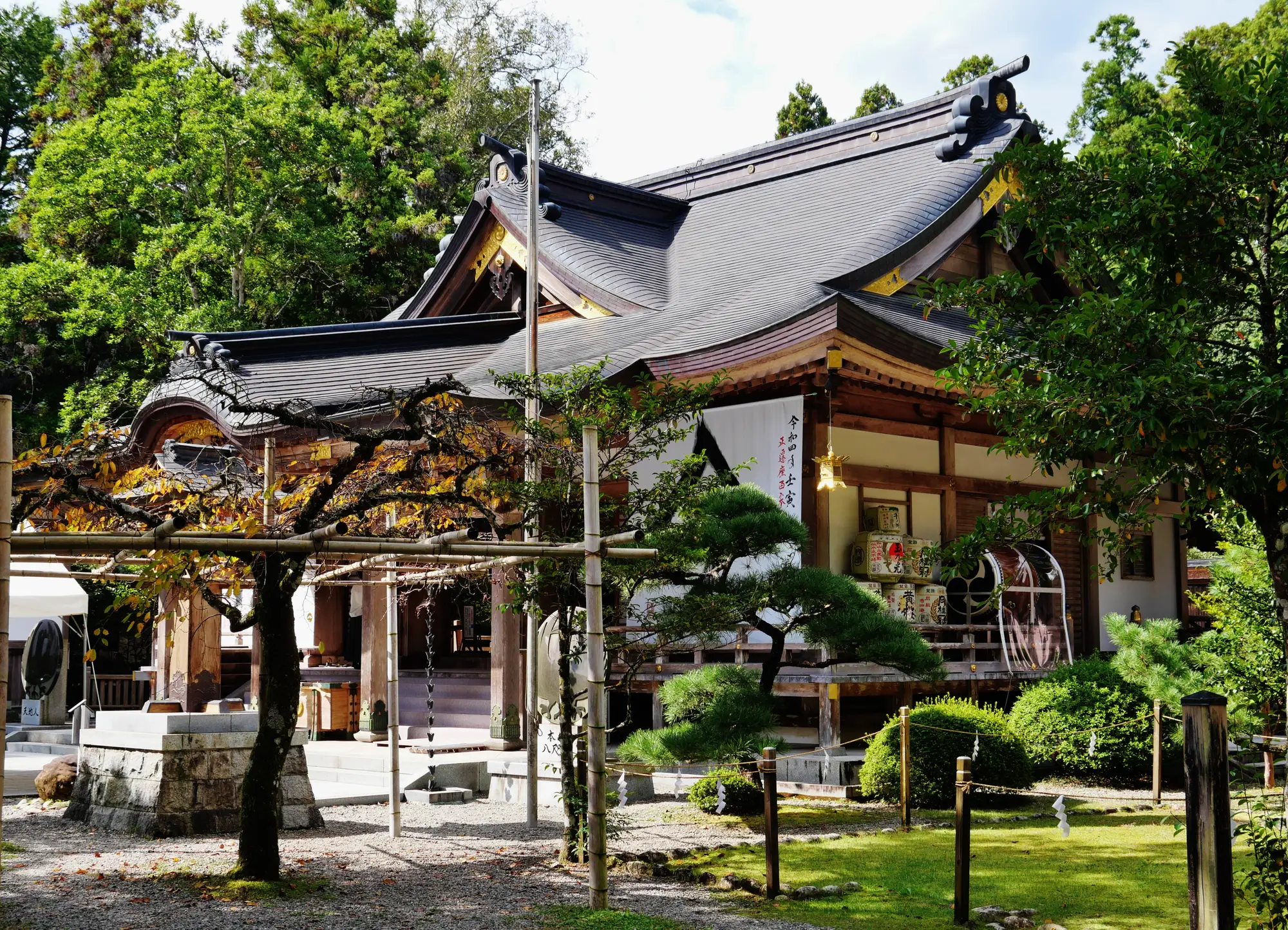
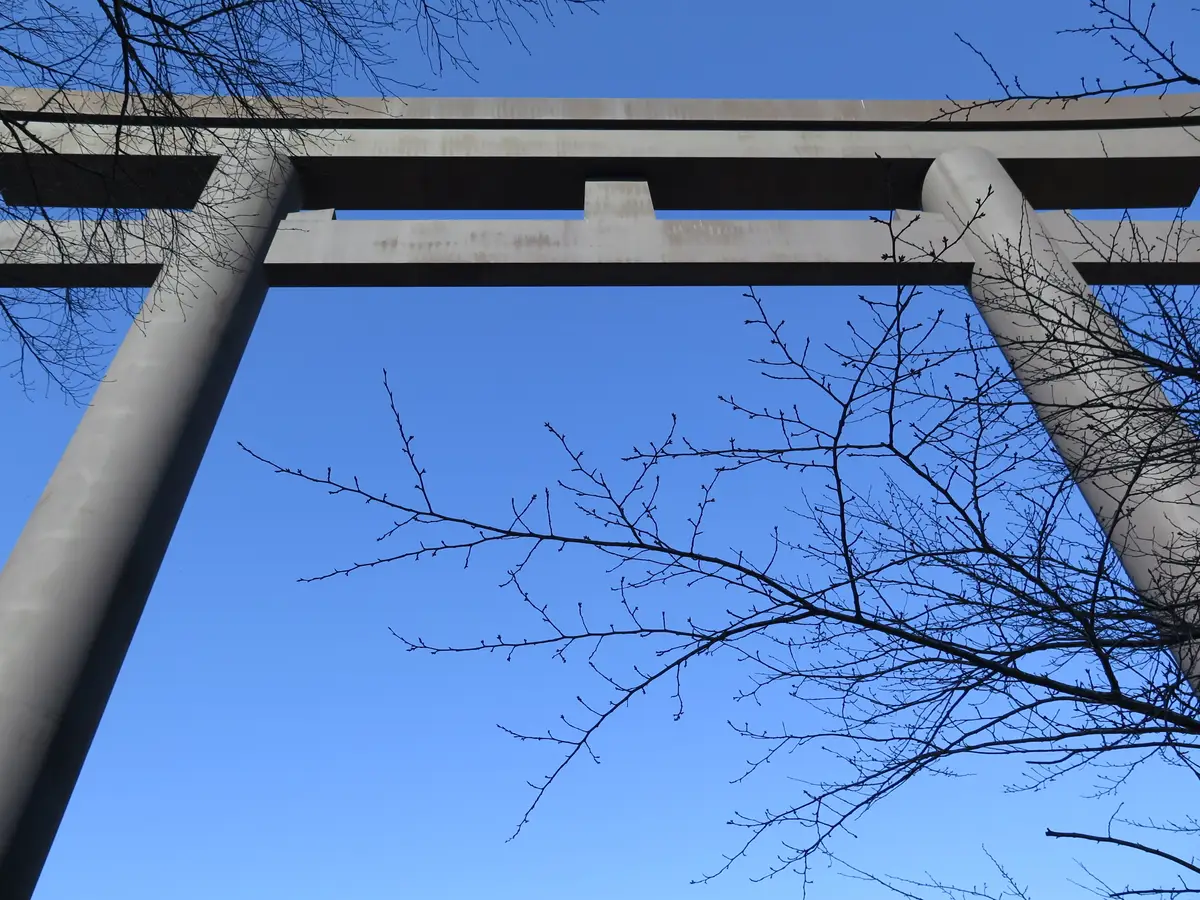
The head shrine of the Kumano faith and the place the Kumano Kodo was built to reach. A flood in 1889 moved it uphill; where it used to stand, Japan's largest torii gate now rises alone over an empty river flat.
A shrine that was moved by a river
For most of its history Kumano Hongu Taisha stood on Oyunohara, a sandbar at the meeting point of the Kumano, Otonashi and Iwata rivers. The precinct was far larger than today's: contemporary records describe twelve enshrined deities across five main buildings, plus a worship hall, kagura hall and noh stage. Pilgrims arriving on foot traditionally waded the Otonashi River to enter it, a final act of purification before reaching the gods.
In August 1889, a typhoon-driven flood known as the Great Totsukawa Flood swept away most of the complex. Only the upper shrine buildings survived — three structures housing four deities — and these were relocated to the hillside site where the shrine stands now, a relocation completed in 1891. The eight deities whose halls were lost are still enshrined at Oyunohara, in two small stone shrines on the raised earth where the old precinct stood.
That is why the shrine can feel smaller than its importance suggests: what visitors see today is the surviving core of a much larger site, and a trip to Kumano Hongu Taisha is really a trip to two places — the current shrine up its 158 stone steps, and the empty flat of Oyunohara ten minutes' walk away.
The three Kumano grand shrines, compared
Hongu is one of three shrines that together form the Kumano Sanzan. Many visitors see all three over two or three days; each feels different.
| Shrine | Setting | Signature sight | Guide |
|---|---|---|---|
| Kumano Hongu Taisha | Inland, deep in the mountains | The 33.9m torii at Oyunohara | This page |
| Kumano Hayatama Taisha | Coastal town of Shingu, at sea level | Vermilion halls, the 538-step climb to Gotobiki-iwa | Hayatama guide → |
| Kumano Nachi Taisha | Mountainside above the coast | Nachi Falls (133m) beside a vermilion pagoda | Nachi guide → |
Before you go
The shrine grounds are free to enter and open from about 8:00 to 17:00. Its treasure hall (Homotsuden) is open only on Saturdays, Sundays and public holidays, 9:00–16:00 with a lunch break from 12:00 to 13:30; admission is ¥300 for adults and ¥100 for children.
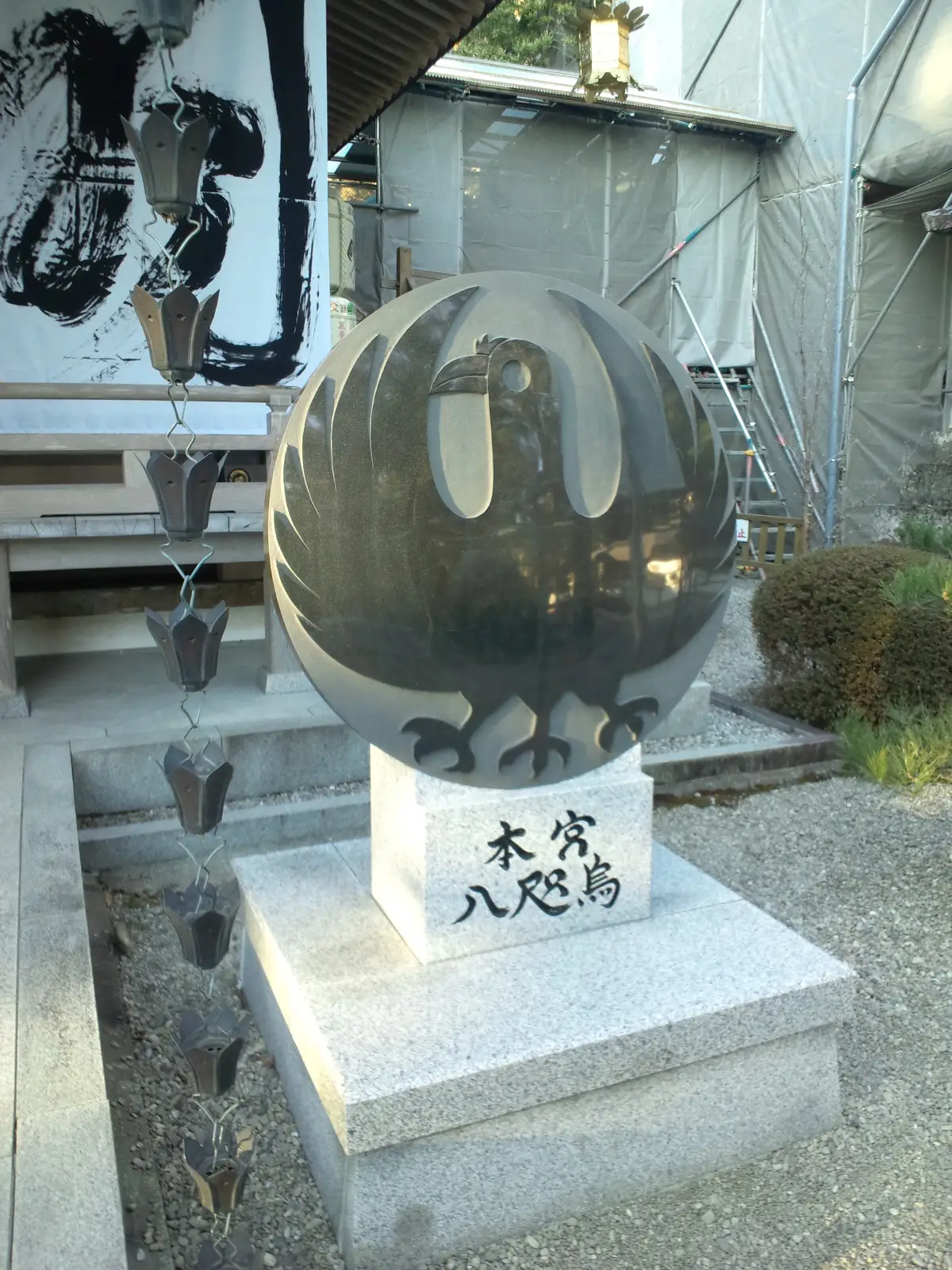
Look for Yatagarasu, the three-legged crow, around the grounds — on banners, charms and a stone monument near the main hall. In legend the crow guided Emperor Jimmu from Kumano to Yamato; the shrine explains its three legs as heaven, earth and humanity. The Japan Football Association adopted a three-legged crow as its emblem in 1931 for the same reason — a guide that "opens the way."
The shrine's grand festival, the Reitaisai, runs April 13–15. On the 13th, priests and children purify themselves at Yunomine Onsen and walk the old Dainichi-goe trail over the mountain to the shrine; on the 15th a portable-shrine procession moves through town to Oyunohara, ending with an outdoor fire ritual.
If you are walking the Kumano Kodo Nakahechi, this is where it ends. The last stretch, from Hosshinmon-oji to the shrine, is about 7km and takes around two hours — a manageable half-day walk even for visitors who aren't doing the full route.
Stay nearby at Yunomine Onsen, about 15–20 minutes by bus or 3.5km on foot by the old trail. It is said to be around 1,800 years old, one of Japan's oldest hot springs, and pilgrims traditionally bathed there before visiting the shrine. Its tiny riverside bath hut, Tsuboyu, is the only hot-spring bath registered as part of a UNESCO World Heritage site.
Visiting: hours and admission
The grounds are free. The treasure hall has limited opening days — check before planning a visit around it.
| Site | Hours | Admission |
|---|---|---|
| Kumano Hongu Taisha (grounds) | About 8:00 – 17:00, year-round | Free |
| Treasure hall (Homotsuden) | Sat, Sun & holidays only, 9:00 – 16:00 (closed 12:00 – 13:30) | ¥300 adults / ¥100 children |
| Oyunohara and the great torii | Always open | Free |
Getting to Kumano Hongu Taisha
There is no train station at Hongu; you arrive by bus. From JR Kii-Tanabe Station (about 2 hours from Osaka by the Kuroshio limited express), direct buses take roughly 2 hours and run about every two hours. From JR Shingu Station, the bus takes roughly 1 hour. Get off at Hongu-Taisha-mae.
Because buses are infrequent, many visitors stay a night in Hongu or at Yunomine, Kawayu or Watarase onsen nearby rather than trying to do it as a day trip from Osaka. Check the latest timetable on the Tanabe City Kumano Tourism Bureau site before you go.