Wakayama · Japan
Tomogashima
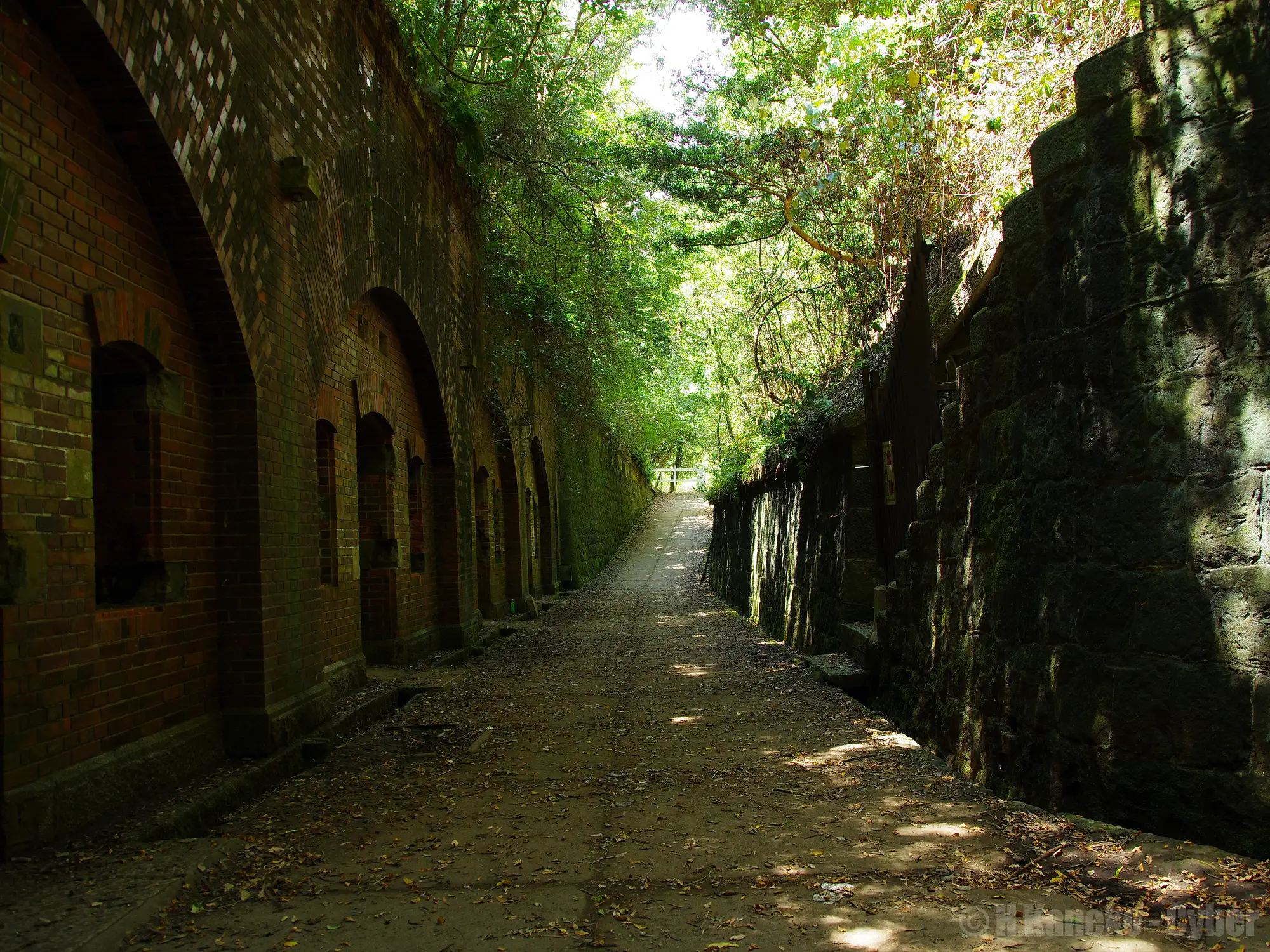
Twenty minutes by ferry from Kada, the port town of Awashima Shrine, lies an uninhabited island where brick gun batteries from the 1890s have spent more than a century being reclaimed by forest — the reason fans of Studio Ghibli's Castle in the Sky make the trip.
A real fortress, not a theme-park ruin
Tomogashima's batteries were a real strategic installation. The Kitan Strait between Wakayama and Awaji Island is the widest sea entrance to Osaka Bay, and as early as the 1850s the Kishu domain posted a magistrate on the islands on the shogunate's orders. From the Meiji era the army built the Yura Fortress on both sides of the strait. On Okinoshima, the main island, it built five batteries between 1889 and 1905 and stationed around 600 soldiers, and ordinary people could not set foot there until the war ended in 1945.
The batteries had different jobs. The First, Second and Fifth were intercept batteries with flat-firing cannon aimed at ships passing through the strait. The Third and Fourth, on higher ground, fired howitzers in high arcs, directed from observation posts. Most were built of red brick laid in English bond, which is exactly why they photograph so well now that the forest has grown over them.
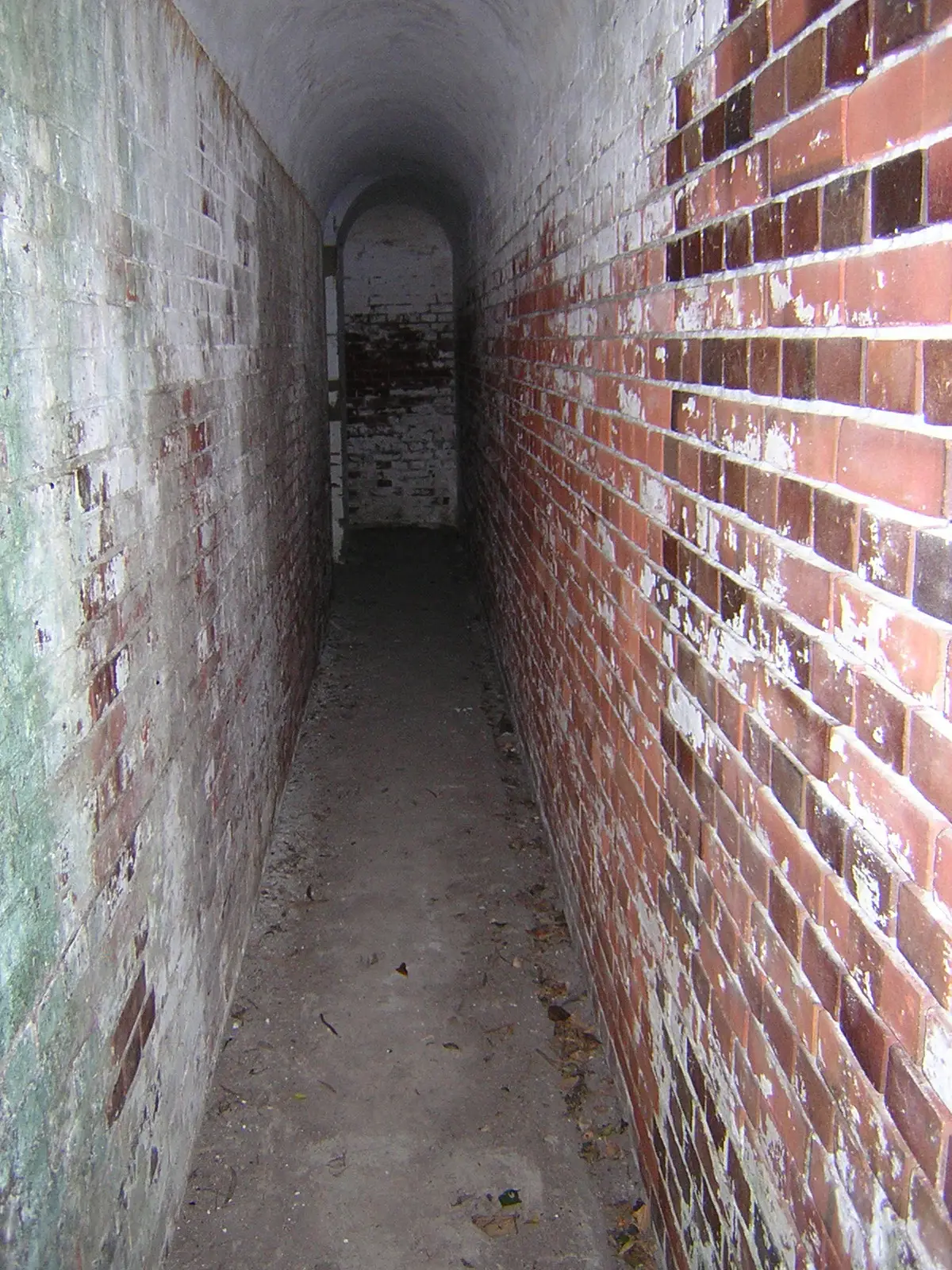
The Third Battery is Tomogashima's main battery and the best preserved. Its guns sat in sunken, bowl-shaped emplacements with a 360-degree field of fire, it had its own power plant and guardhouse, and stairs lead down to underground magazines and shell-lifting rooms that you can walk through. Some rooms are pitch dark and the floors are uneven, so Wakayama City recommends bringing a flashlight. The ammunition depot beside the Third Battery is the other much-photographed ruin.
The other batteries are in varying states. The inside of the First Battery, next to the lighthouse, is managed by the Japan Coast Guard and normally closed. The Second Battery, on the shore, was partly blown up by US forces at the end of the war and has since been eroded by typhoon waves; its interior is fenced off, but you can look in from outside. The Fourth Battery was retired in 1906, only 14 years after completion, and escaped post-war demolition as a result.
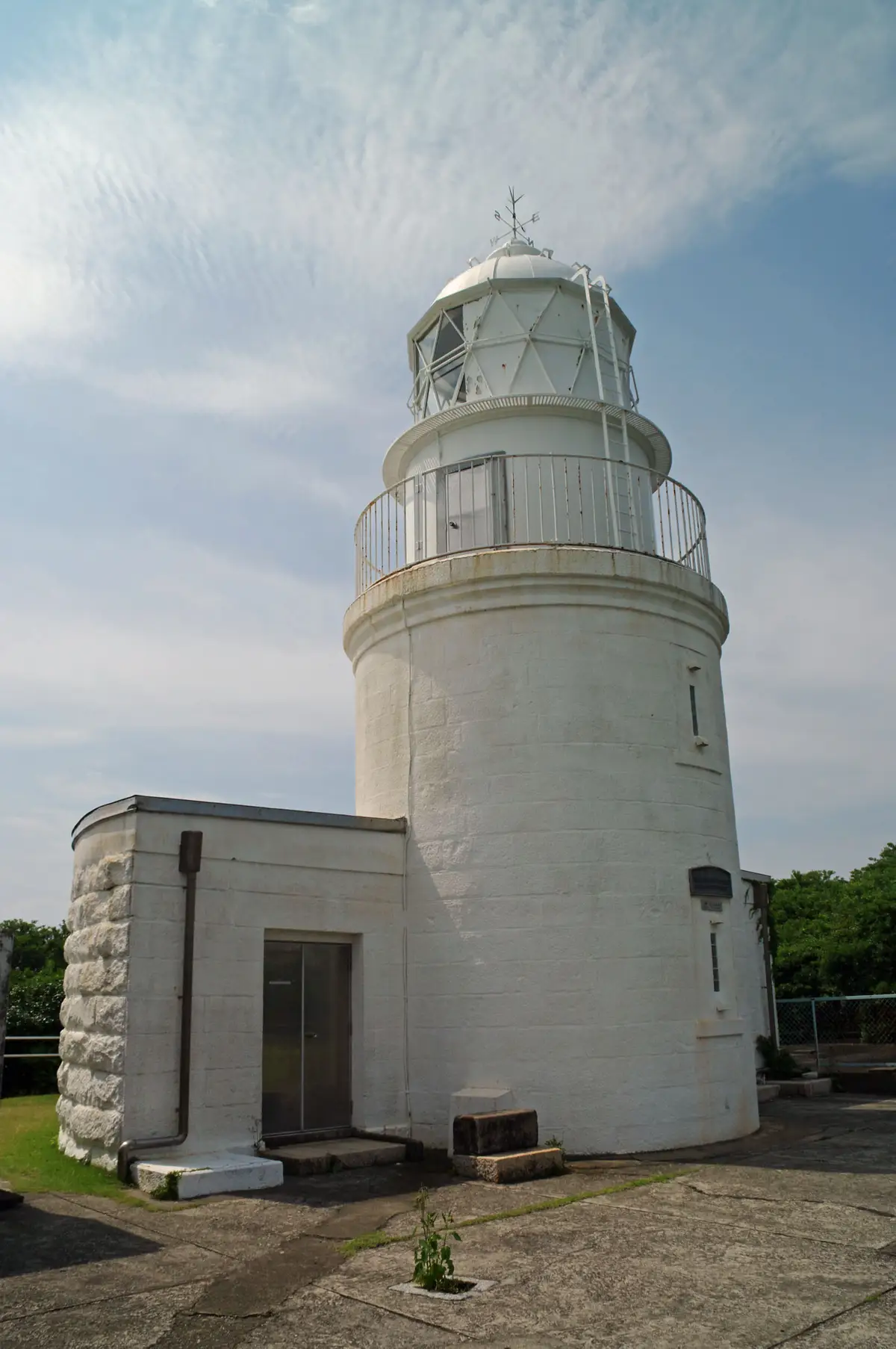
Tomogashima Lighthouse is the other historic structure worth the walk. Designed by the British engineer Richard Henry Brunton, it was first lit on 25 June 1872 as one of Japan's early Western-style stone lighthouses. It originally stood 25 metres closer to the sea and was moved to make room for the fort. The lighthouse is still working and is a Registered Tangible Cultural Property.
Tomogashima also draws fans of the anime Summer Time Render (2022), set on a fictional island off Wakayama City; the city promotes Tomogashima as one of the story's real-life locations. Wakayama City allows non-commercial photography, including cosplay, but there are no changing rooms on the island.
What to see on Okinoshima
The ferry lands at Nonoura on Okinoshima. The standard loop from the pier is 3.3km: about 1 hour 20 minutes of walking, or 2.5 hours with stops.
| Stop | From Nonoura pier | What you see | Notes |
|---|---|---|---|
| Third Battery and ammunition depot | About 0.9km, 20 min uphill | Brick tunnels, underground magazines, bowl-shaped gun pits | Bring a flashlight |
| Takanosu-yama viewpoint | Next to the Third Battery | The Kitan Strait, with Shikoku, the Rokko range and the Izumi-Katsuragi mountains on clear days | Observation deck |
| Kosukematsu beach | A further 1.0km, 20 min | A stretch of shoreline on the loop | No swimming anywhere on the island |
| Lighthouse, First Battery and Meridian Plaza | A further 0.3km, 10 min | The 1872 Brunton lighthouse; surviving observation posts | First Battery interior closed (Coast Guard) |
| Second Battery | A further 0.3km, 10 min | Collapsed seaside battery walls | Interior off-limits; view from outside |
Before you go
Plan for about three hours on the island. The 16:30 boat from the island is the last one back to Kada, and there is no later sailing if you miss it, so keep an eye on the time.
There are no advance reservations. Each ferry carries 100 people, and for the second sailing onward, same-day numbered boarding tickets are handed out at Kada Port; at busy times they can run out early, so arrive well before the sailing you want. The round-trip fare rose on 1 July 2026 to ¥2,800 for adults (children ¥1,250, unchanged). One piece of hand luggage is free; bicycles cost ¥1,000. The operator's site does not say whether cards are accepted, so bring enough cash.
Sailings are cancelled in rough weather, and the call is made on the morning itself, so check the Tomogashima Kisen website or its X account before setting out. If the boat is not running, Wakayama City suggests the Miyama battery ruins on the mainland near Kada as a substitute, and the same company runs sightseeing cruises around the island.
Island rules: swimming is not allowed (there is no designated beach), pets are not allowed except assistance dogs, and fires are allowed only in designated barbecue areas. Camping is possible at Minami-Tarumi square with a reservation made at least five days ahead. Torajima and the Shinja-ike pond are closed to visitors, and landing on Kamishima is not permitted. Drones need prior consultation with the Kansai Airport office of the Osaka Civil Aviation Bureau, because the island sits under the airport's flight path.
Awashima Shrine, with its thousands of donated dolls, is in the same small town and makes an easy pairing before or after the ferry. For a base, see our Wakayama City guide.
Tomogashima ferry: timetable and fares
Tomogashima Kisen runs the only ferry, from Kada Port to Nonoura pier, about 20 minutes each way.
| Period | Operating days | Kada Port departures | Island departures |
|---|---|---|---|
| March to December | Daily except Wednesdays (runs if Wednesday is a public holiday) | 9:00, 11:00, 13:00, 16:00 | 9:30, 11:30, 13:30, 16:30 (last boat back) |
| Golden Week (late April–early May) and 20 July–31 August | Daily, including Wednesdays | Adds 10:00 and 15:00 (the 15:00 is for pick-ups only, not day visits) | Adds 10:30 and 15:30 |
| January and February | Weekends and public holidays only (none 29 Dec–3 Jan) | 9:00, 11:00, 13:00, 16:00 | 9:30, 11:30, 13:30, 16:30 |
| Fare (from 1 July 2026) | Round trip | Adults ¥2,800; children ¥1,250 | One way: adults ¥1,400; children ¥620 |
Getting to Tomogashima
From Nankai Wakayamashi Station, take the Nankai Kada Line to Kada Station (about 25 minutes), then walk about 20 minutes to Kada Port. From Namba in Osaka, allow about 100 minutes to Kada Station; from Kansai Airport, about 70 minutes by Nankai with changes at Izumisano and Wakayamashi.
From Kada Port, the Tomogashima Kisen ferry takes about 20 minutes to Nonoura pier on Okinoshima. The first boat leaves at 9:00; aim to be at the port early on weekends and in summer.
By car, Kada Port is about 40 minutes from the Wakayama-kita IC of the Hanwa Expressway (usable from the Osaka direction only) or about 45 minutes from the Wakayama IC. Parking at Kada Port costs ¥700 a day. Roads into Kada get congested in Golden Week and the summer holidays, so the train is often easier.
Primary sources
- Wakayama City — Tomogashima (overview and notices)
- Wakayama City — Tomogashima timetable, fares and access
- Wakayama City — Tomogashima closures and path conditions
- Wakayama City — Third Battery ruins
- Wakayama City — Tomogashima Lighthouse
- Tomogashima Kisen — ferry fares and timetable
- Japan Society of Civil Engineers — Tomogashima battery group
Last updated: