Wakayama · Japan
Arakawa Peaches
Wakayama ships more peaches than any other prefecture in western Japan, and its best-known brand comes from one district of Kinokawa. The name "Arakawa no Momo" is protected by trademark and by Japan's geographical indication system, so it means a place, not a variety.
A trademark, not a variety
The name "Arakawa" comes from the old name of this area on the south bank of the Kinokawa River. It was written Arakawa (荒川) from the Heian period, then Arakawa (安楽川) from the Meiji era, until Anrakugawa village and two others merged in 1956 to form Momoyama-cho, literally "peach mountain town." Peach growing here is usually dated to 1782, when trees were brought in from Ikeda in Settsu Province, near today's Osaka, and in the Meiji era cultivation spread to neighbouring villages.
The names "あら川の桃" and "あらかわの桃" were registered with Japan's Patent Office on 29 July 1994. Because the name was still being used on peaches from elsewhere, local growers formed the Arakawa Peach Promotion Council in January 2002 to set shipping standards. In 2023 the brand was added to Japan's geographical indication register, which limits it to peaches from Momoyama-cho and neighbouring Takefusa that meet the council's standards. Fruit that fails the standards goes to processing, not to the Arakawa-labelled box. According to the GI listing, the brand's even colour and fruit size earn it premium prices at wholesale markets, especially for gifts, and the peaches are known for holding up well to handling and storage.
The Kinokawa valley is western Japan's main peach belt, and Arakawa is one of four peach brands in the prefecture, alongside Kinosato, Kozu and Katsuragi peaches. The latest national figures put Wakayama's harvest at about 6,580 tonnes, well behind Yamanashi and Fukushima but ahead of every prefecture further west.
The peach relay: which variety, when
There is no single "peach day." Growers ship early varieties first and late ones last, so the fruit you find depends on the week.
| Variety | Harvest | Place in the season |
|---|---|---|
| Hikawa Hakuho (日川白鳳) | Mid to late June | Opens the season |
| Hakuho (白鳳) | Early to mid-July | Early to mid-season |
| Shimizu Hakuto (清水白桃) | Mid to late July | Mid to late season |
| Kawanakajima Hakuto (川中島白桃) | Late July to mid-August | Closes the season |
Before you go
For Arakawa-branded fruit, the easiest stop is the Momoyama Tokusan Center, a farm shop in Momoyama-cho that sells Arakawa peaches and peach products, open 9:00–17:00 and without closing days from June to mid-August. It is a car stop: about 15 minutes from Kinokawa IC.
Katsuragi's picking season varies by farm. In the most recent listing from the Katsuragi Tourism Association, Hayashi Farm ran from 25 June to 25 July (¥2,500 for 45 minutes), Meizan Farm from mid-June to late August, and Sakaguchi Farm for less than two weeks in July (¥2,800 for 60 minutes). All ask you to reserve directly by phone, and prices do not include extra fruit to take home.
Call the farm before you go. Because the harvest relays through several varieties, the farm will know what is ripe that week, and weather can change plans at short notice. The farms list mobile phone numbers in Japanese, so a Japanese speaker or your hotel front desk can help with the call.
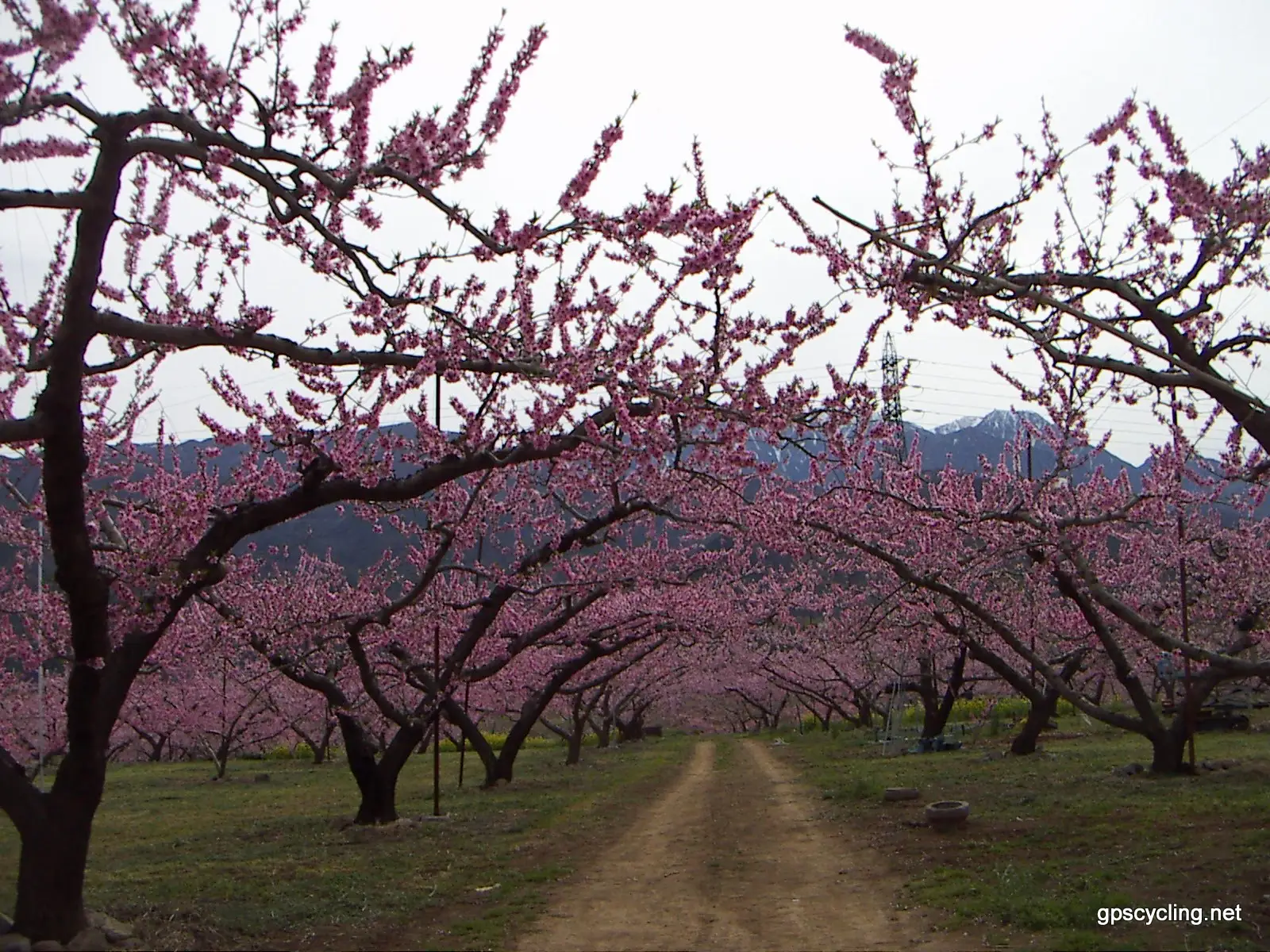
If you are here in spring instead, the peach blossom is the reason to come. From late March to early April, the orchards along the Kinokawa embankment in Momoyama, known as Togenkyo ("peach-blossom paradise"), flower all at once. Locals call it "hitome jumanbon," 100,000 trees at a glance, and it is listed among Japan's 100 Fragrant Landscapes. Viewing is free; a temporary car park opens from mid-March to early April (9:00–17:00), and the Momoyama Matsuri festival is held in early April. The orchards are private farmland, so stay on paths and take your rubbish home.
Kinokawa is inland, on the JR Wakayama Line rather than the coastal Kuroshio route used for Shirahama and Kumano. It combines well with Negoroji temple in neighbouring Iwade, whose cherry trees bloom in the same late-March to early-April window, or with Koyasan, further up the valley. For the rest of Wakayama's fruit calendar, including Arida mikan and Minabe plums, see Best Time to Visit.
Getting to Kinokawa
For the Togenkyo peach blossoms in Momoyama, take the JR Wakayama Line from Wakayama Station to Shimoisaka Station (about 22 to 28 minutes), then walk about 30 minutes across the river. There is no station in Momoyama itself, and taxis are more easily found at Uchita Station, one stop further east.
For peach picking in Katsuragi, stay on the JR Wakayama Line to Kasada Station (about 40 to 50 minutes from Wakayama Station). Most farms are about 5 minutes from Kasada by car; Meizan Farm is about a 28-minute walk. A car makes all of this far easier, since the orchards are spread across farmland rather than next to stations.
Primary sources
- Wakayama Prefecture — Wakayama Shokuzai Terroir: Peaches
- MAFF GI register — Arakawa no Momo (No. 133)
- Arakawa Peach Promotion Council — Togenkyo
- Kinokawa City — Togenkyo
- Kinokawa City — Momoyama Tokusan Center
- Wakayama Prefecture — Wakayama rankings (peach harvest)
- Katsuragi Tourism Association — peach picking farms
- Meizan Farm — peach picking
Last updated: