Wakayama · Japan
Nachi Fire Festival
Once a year, men in white carry twelve huge flaming torches up and down the stone steps below Nachi Falls — one of Japan's great fire festivals, and the day the shrine's deities are carried back to the waterfall they came from.
The deities go home once a year
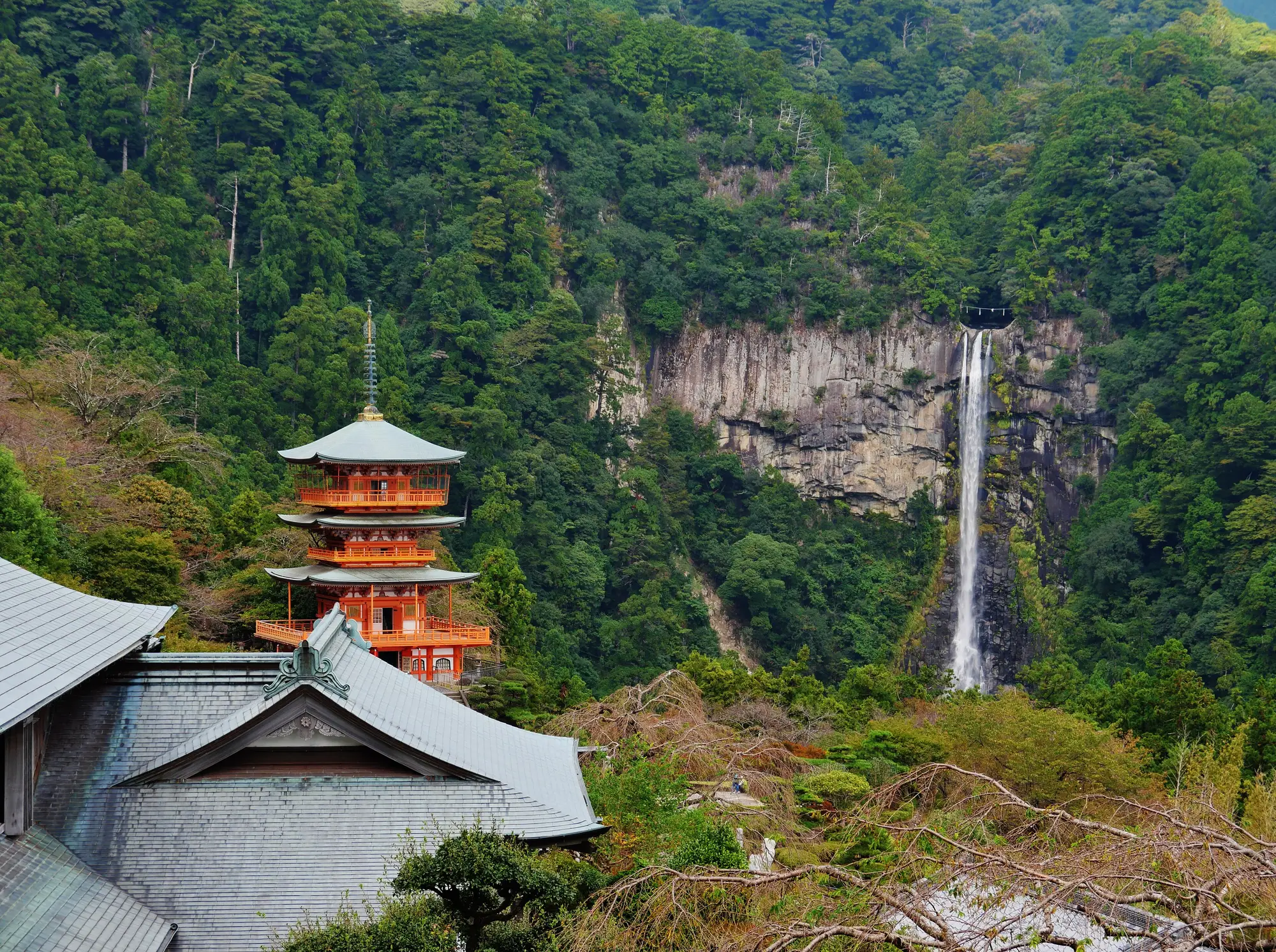
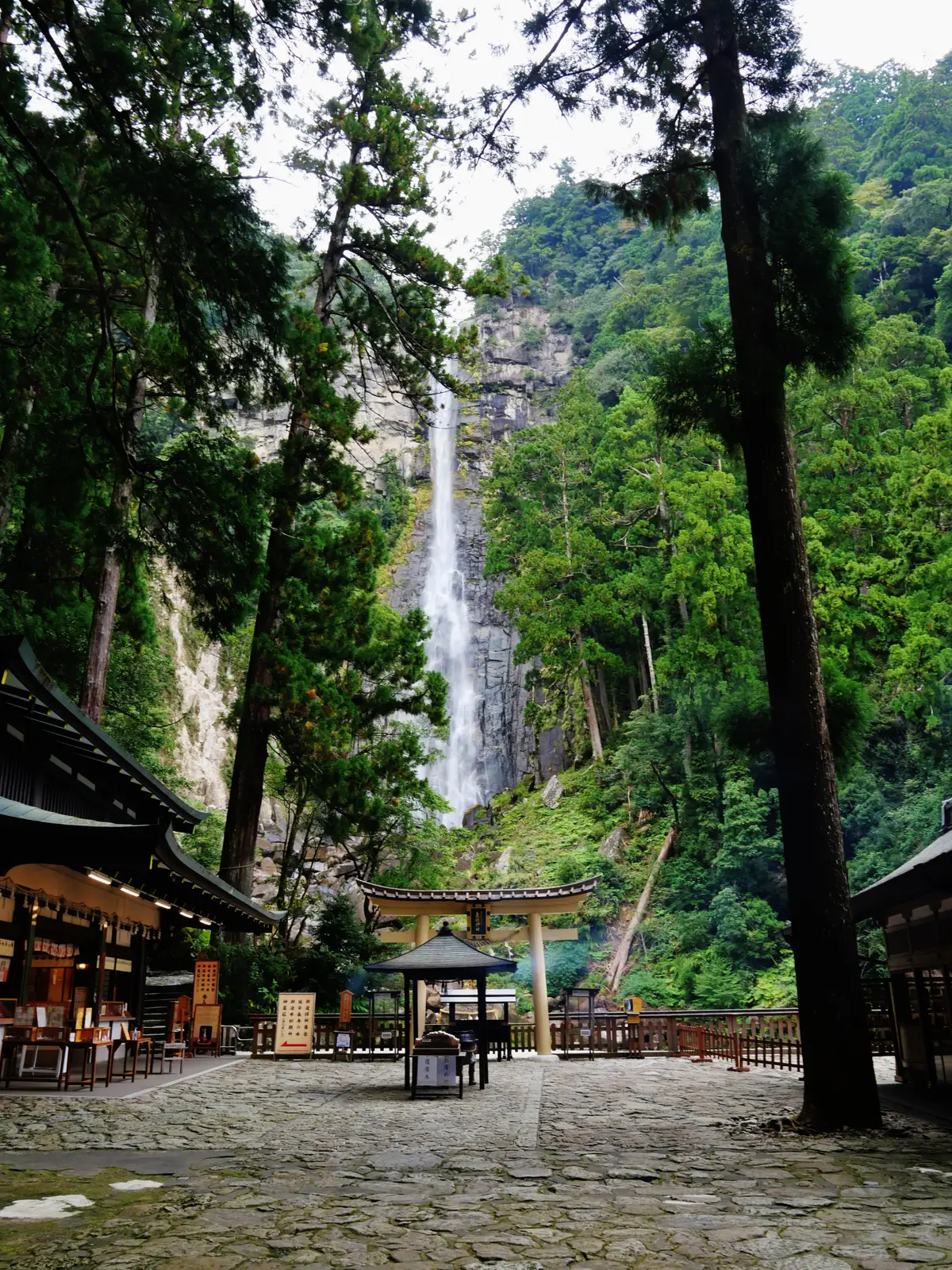
Nachi Falls is worshipped as a deity in its own right. According to Kumano Nachi Taisha, worship at Nachi began at the foot of the falls, and the shrine's halls were moved up to their present site on the hillside in the year 317. The Ogi Matsuri re-enacts that story in reverse: the deities, now enshrined at the top of the hill, are transferred into twelve ogi mikoshi and carried back down to Hiro-jinja, the shrine at the base of the falls. The shrine explains the festival as honouring water, the heart of worship at Nachi, and fire; it is the fire that gave it the popular name Nachi-no-Hi Matsuri, the Nachi Fire Festival.
The ogi mikoshi are not the boxy portable shrines seen at most Japanese festivals. Each is a tall, narrow frame about six metres high and about a metre wide, hung with white-bronze mirrors and painted cypress fans, and its shape is said to represent the falling water. The torches, called taimatsu, are numbered one to twelve: the first weighs about 50kg and the twelfth about 25kg, each roughly 1.3 metres tall and 44cm across.
The fire ritual is only part of a full day. The morning brings sacred dances and Nachi no Dengaku, a ritual field-music performance handed down since the Muromachi period and inscribed on UNESCO's Intangible Cultural Heritage list, plus a rice-planting rite. In the afternoon, after the torches, come a rice-harvesting rite and a dance facing the falls. So although fire is what everyone photographs, the festival is also a prayer for water and a good harvest.
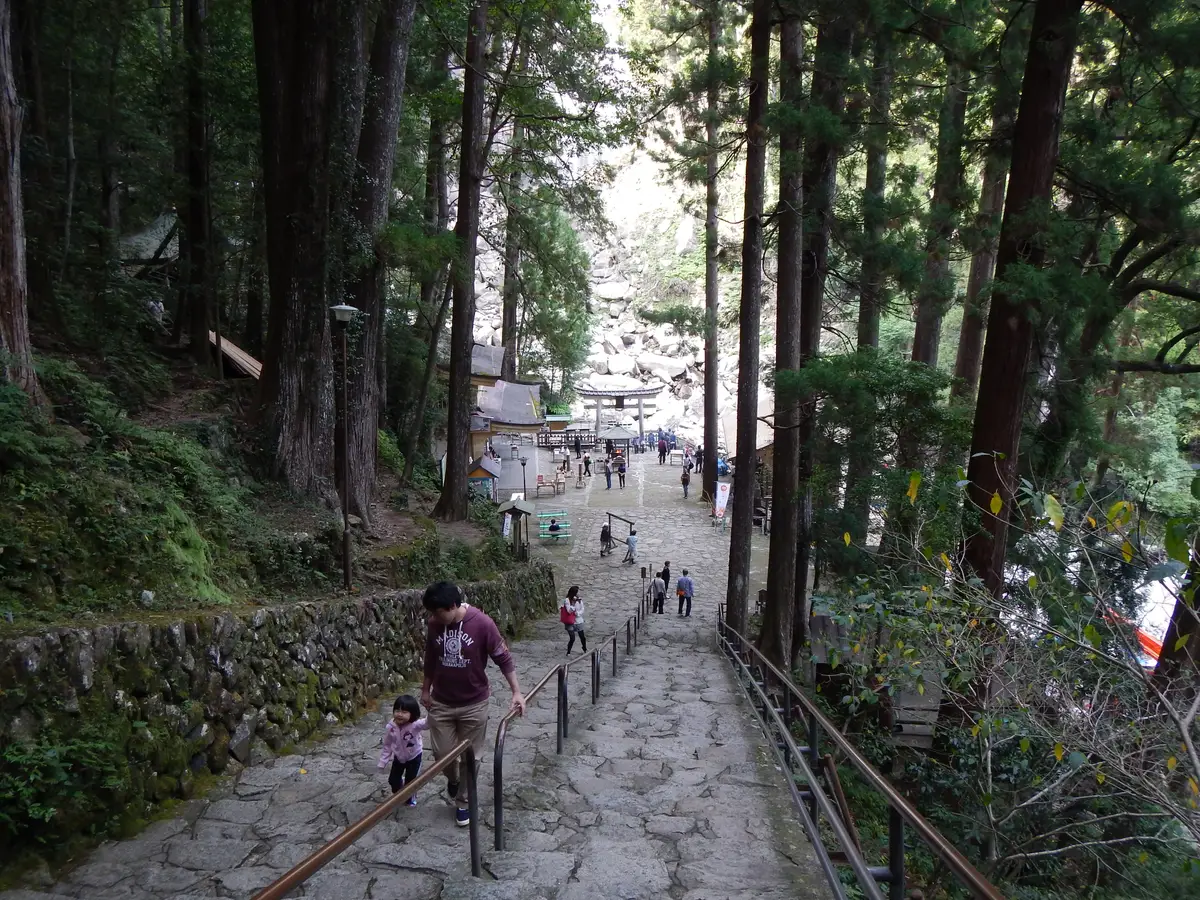
Everything happens on the same ground visitors walk on any ordinary day: the stone stairway from the main road down to Nachi Falls, below the shrine and Seiganto-ji's pagoda. That makes the setting unusually dramatic, but it also means space is tight.
The July 14 timetable
This is Kumano Nachi Taisha's published order of ceremonies. If you only want the fire, be in place at the falls approach well before 13:30; the torches meet the mikoshi around 14:00.
| Time | Where | What happens |
|---|---|---|
| 10:00 | Main shrine | Opening rite with offerings at the main halls |
| 11:00 | Shrine stage | Yamato-mai, sacred dances performed by local schoolchildren |
| 11:30 | Shrine stage | Nachi no Dengaku ritual music and dance (UNESCO Intangible Cultural Heritage) |
| 12:15 | Main shrine | Rice-planting rite, sung and danced with old wooden farm tools |
| 13:00 | Main shrine | The twelve ogi mikoshi set off with the deities toward the falls |
| 13:30 | Fushiogami | The twelve fans are raised and set up one by one |
| 14:00 | Falls approach | Fire rite: the twelve great torches meet and purify the mikoshi |
| 14:17 – 14:50 | Hiro-jinja, at the falls | Ogi-home rite, ceremony before the falls, rice-harvesting rite and a dance facing the falls |
| 15:30 | Main shrine | The mikoshi return and the deities are returned to the halls |
Before you go
Driving is the hardest way to come. The shrine says the paid car parks on Nachi-san usually fill by around 10:30; after that, drivers are directed to temporary lots lower down the mountain, including the Daimonzaka car park, and ride a free Kumano Gobo Nankai shuttle bus up. Parking there is limited too, so the shrine asks visitors to use public transport where possible.
The festival is always on July 14th, whatever the day of the week; in 2027 that is a Wednesday. The shrine also holds smaller preparatory rites on the days before.
This is the single busiest day of the year at Nachi. If you plan to stay overnight in Katsuura rather than day-tripping, book well in advance. The Nachikatsuura Tourism Organization has in some years sold paid reserved-seat viewing packages, so it is worth checking its website in spring.
July in Wakayama is hot and humid, and you will likely be standing on stone steps for hours before the fire rite. Bring water, a hat and sun protection rather than relying on shade. The torches send out sparks and heat, so follow the stewards' instructions about where to stand.
For the rest of your stay, see the Nachi and Katsuura guide for hotels and the falls on a normal day, and the Katsuura tuna market for a morning activity. July 14 is a Tuesday in 2026 and a Wednesday in 2027; the tuna auction does not run on most Tuesdays.
Getting to the festival
Take the JR Kuroshio limited express from Shin-Osaka or Tennoji to Kii-Katsuura Station, about 3.5 to 4 hours. From the station, Kumano Gobo Nankai regular buses run on their normal timetable to the Nachisan stop, about 30 minutes. On festival day, the shrine says buses pick up and drop off only at the Nachisan stop. Expect them to be crowded.
A taxi from Kii-Katsuura Station takes about 20 minutes and can drop you near the Nachi-no-Taki-mae bus stop, close to the falls.
If you are already staying in Katsuura for the coast, this is a short trip from your hotel rather than a special journey. Leave early anyway, as roads up the mountain back up once the car parks are full.