Wakayama · Japan
Warai Matsuri
Once a year, a man in clown paint and costume leads a procession through a small river-valley town chanting "Warae! Warae!" (Laugh! Laugh!), because, according to legend, that's exactly what it took to cheer up a goddess who overslept.
A festival that makes laughter the offering
Most Japanese festivals commemorate a harvest, a purification, or a deity's procession. Warai Matsuri is unusual because its central ritual is laughter itself. The story goes that Niutsuhime, the goddess of Niu Shrine, slept through the gathering of the gods at Izumo in the tenth month and fell into despair; the villagers' response was to laugh with her until her spirits lifted. Local descriptions of the festival add the belief behind it: laughter drives away bad luck and brings a good harvest.
The festival's star is the suzufuri. He wears white face paint with bright red cheeks marked 笑, a red headscarf and a patchwork of bright colours, shakes a bell, hands out sweets to the crowd, and shouts "Warae! Warae!" at anyone who isn't laughing yet. Behind him walk twelve bearers (thirteen in a leap year) carrying square wooden masu measures piled with skewered mikan and other offerings to the shrine.
Warai Matsuri is really four village festivals rolled into one. Niu Shrine was formed in 1909 by combining the shrines of Wasa, Egawa, Yamano and Matsuse, and each of those districts still brings its own performance: the laughing procession and a dancing lion from Wasa, a yakko-odori (retainers' dance) from Egawa, a suzume-odori (sparrow dance) from Yamano, and takeuma-gake, a bamboo-horse run, from Matsuse. At the shrine entrance, costumed oni (demons) from the different districts take part in formal greeting ceremonies before the main event.
Niu Shrine in Hidakagawa should not be confused with Niutsuhime Shrine in Katsuragi, the larger World Heritage shrine at the foot of Koyasan. Warai Matsuri happens at the small village shrine near the Hidaka River, south of Gobo.
Festival day schedule
The day runs from about 9:00 to 17:00. Times are approximate and shift a little each year; the procession at around 11:00 is the part most visitors come for.
| Time | What happens | Where |
|---|---|---|
| About 9:00 | "Oni no deai" (meeting of the demons): costumed oni from the districts meet | Near the otabisho, the temporary resting place of the portable shrine |
| About 10:40 | Lion dances | Along the procession route |
| About 11:00 | The suzufuri appears and leads the procession to the shrine, shouting "Warae! Warae!" | From the otabisho to Niu Shrine |
| About 12:50 – 17:00 | Performances at the shrine: four-drum playing, banner raising, the district dances and lion dances | Niu Shrine grounds |
Before you go
Aim to arrive by about 10:30 so you are in place before the suzufuri's procession sets off around 11:00. If you only have a few hours, the late-morning procession and the first performances at the shrine are the core of the festival.
This is a small community festival with no admission infrastructure aimed at tourists: no ticket booths, no English signage, no reserved viewing. Part of the appeal is that it has not been adapted for outside visitors, so bring cash and water and expect rural logistics rather than a polished event.
Do laugh. The suzufuri singles out unsmiling spectators, and joining in is the point of the day. Photography of the procession is normal, but step aside for the bearers and performers on the narrow road.
Pair it with Dojoji, one stop north at Dojoji Station and a short walk from it. The temple is the setting of the Anchin and Kiyohime legend, holds a National Treasure thousand-armed Kannon among more than twenty Buddhist statues, and gives picture-scroll sermons (etoki) of the story several times a day. It is open 9:00–17:00 year-round; admission is ¥700 for adults.
The four district performances
Each district that formed Niu Shrine brings its own traditional art. These are performed at the shrine in the afternoon.
| District | Performance | What to look for |
|---|---|---|
| Wasa (和佐) | The laughing procession and odori-jishi (dancing lion) | The painted suzufuri, the bearers with masu of skewered mikan, the shouts of "Warae!" |
| Egawa (江川) | Yakko-odori (retainers' dance) | A dance modelled on the attendants of a feudal lord's procession |
| Yamano (山野) | Suzume-odori (sparrow dance) | Dancers in wide hats; the sparrow dance is also found in neighbouring Gobo |
| Matsuse (松瀬) | Takeuma-gake (bamboo-horse run) | Performers riding bamboo hobby horses |
Getting to Warai Matsuri
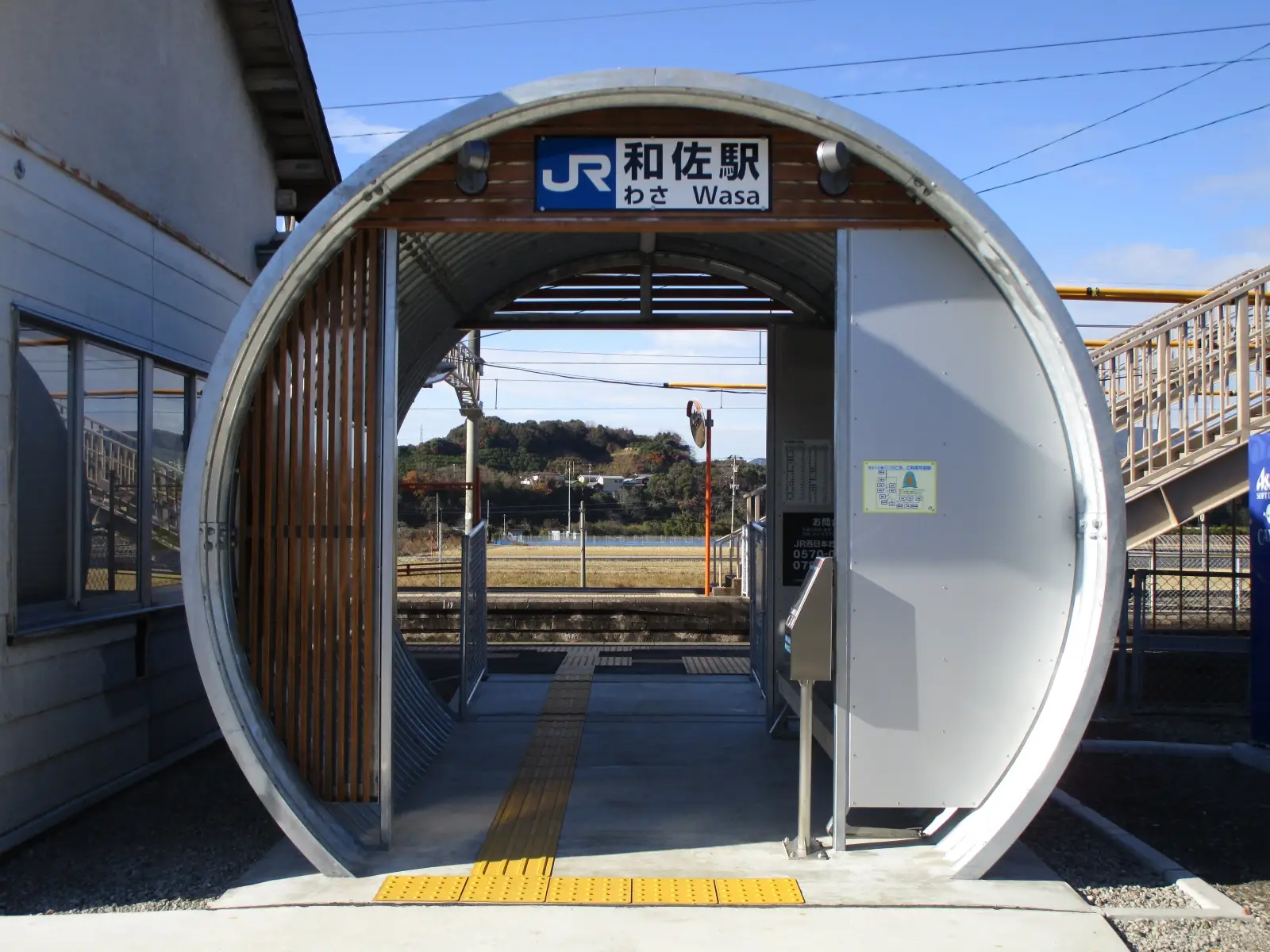
From Osaka, take the JR Kuroshio limited express from Shin-Osaka or Tennoji to Gobo, roughly 1.5 to 2 hours, then change to a local train for the two stops to Wasa Station. Local trains on this stretch are infrequent, so check the connection before you set out.
From Wasa Station, Niu Shrine (1956 Egawa, Hidakagawa) is a 5-to-10-minute taxi ride. There is no parking at the festival site.
Gobo is on the same Kuroshio line as Shirahama and Minabe, under an hour to the south, so Warai Matsuri works as a day trip from a Shirahama stay.
Primary sources
- Hidakagawa Town Tourism Association — Niu Shrine and Warai Matsuri
- Hidakagawa Town official site — festivals
- Wakayama Prefecture cultural properties — Niu Matsuri (Prefectural Intangible Folk Cultural Property, 1979)
- Wakayama Prefecture official tourism site — Niu Matsuri (Warai Matsuri)
- PR WAKAYAMA — Warai Matsuri
- Dojoji Temple — visiting information
Last updated: